Currently Empty: $0.00

How Long Does It Take to Compact a Site with a Road Roller

A site manager promises a client the base for a small parking lot will be compacted and ready by noon, figuring one roller can knock it out in a couple of hours. By early afternoon the machine is still crawling across the lot, the aggregate needs more passes than he counted on, and the paving crew he booked for the next morning is now standing around waiting on ground that isn't ready. Nothing about the roller failed, and the operator knew his job. The estimate simply ignored the site's size, the material, and the number of passes the spec demanded, and a rushed guess turned into a blown schedule. That miss is exactly why understanding compaction time matters before you ever quote a deadline.
Estimating compaction time comes down to weighing the site, the material, the roller, and the density target together, then pacing the work to match. Guess too low and you strand the next crew waiting on unfinished ground; pad too high and you tie up a machine and an operator longer than the job needs. This guide walks through why compaction time matters, the factors that shape how long it takes, typical estimates by site type, how to pace rolling efficiently, the signs that tell you a section is done, and the habits that keep a job finishing on schedule. Here's what to know before you set a deadline.
Why Getting the Timeline Right Pays Off
Scheduling hinges on an honest compaction estimate, since so much other work waits on ground that's ready. Paving crews, concrete pours, and follow-on trades all depend on a compacted base arriving on time, so a timeline that's off by hours ripples straight into idle labor and blown appointments. A realistic estimate protects every crew scheduled behind the roller.
Cost follows the clock in both directions. Underestimating leaves you rushing, cutting passes short, and delivering weak ground that fails inspection or the surface built on top of it. Overestimating ties up a rented machine, an operator, and fuel longer than the job warrants, quietly draining a budget on hours the work never needed.
Confidence in your number is what lets you commit to a client without gambling. Knowing roughly how long a site takes means you quote deadlines you can actually hit, book the next crew at the right hour, and keep the whole project moving without dead time.
Key takeaway: A sound compaction estimate keeps your schedule honest, your crews working, and your budget lean. Treat the timeline as a number worth calculating rather than a figure worth guessing.
Factors That Shape How Long the Job Runs
Several variables drive compaction time, and no single figure fits every site, so read the conditions before you commit to an estimate. The same roller might finish one lot in an hour and need half a day on another, all depending on what you're compacting and how the site is set up. Weighing these factors together keeps your estimate grounded in reality.
Site size sets the baseline, since a roller covers ground at a roughly fixed pace. Total square footage, multiplied by the number of passes each section needs, decides how much rolling the machine actually performs. A large open pad takes far longer than a small driveway simply because there's more surface to cover.
Material and lift thickness push the number up or down. Asphalt compacts fast while the mix stays hot, granular base settles in a moderate number of passes, and cohesive soils like clay resist compaction and demand more time to reach density. Thick lifts trap compaction energy near the surface and need extra passes, so a site rolled in fewer, thicker layers often takes longer per layer than one built in thin lifts.
Roller choice ties the estimate together. A wider drum covers more ground per pass, a heavier machine reaches density in fewer passes, and switching on vibration multiplies compaction force to cut the pass count further on suitable material. What this means: compaction time is never a fixed number, so weigh your site size, material, lift thickness, and roller capability together before you promise a deadline.
Realistic Time Estimates by Site Type
Numbers give you a starting point, so knowing rough ranges helps you plan a job before you confirm it on site. These estimates assume a properly sized roller, appropriate lifts, and typical conditions, and they shift with material, moisture, and machine size, but they frame what to expect. Here's a practical look at where common jobs land:
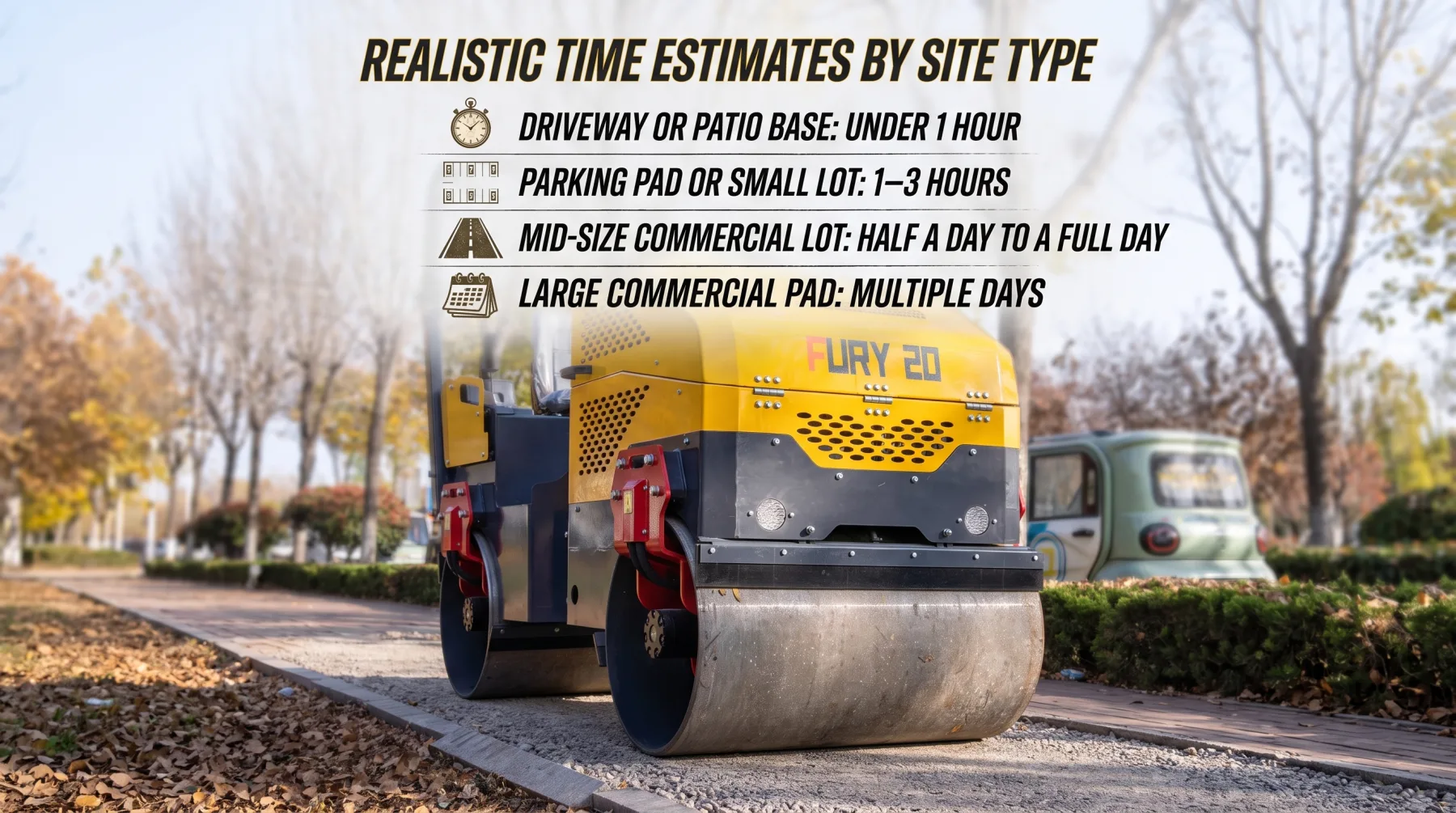
- **Small residential driveway or patio base:** Often under an hour of rolling, since the area is small and the passes add up quickly on a compact surface.
- **Residential parking pad or small lot base:** Roughly one to three hours, depending on square footage, material, and the number of passes the spec requires.
- **Mid-size commercial lot or roadway section:** Frequently half a day to a full day, as the larger area multiplies the rolling across every pass.
- **Large commercial pad or extended roadway:** Multiple days, often with more than one roller running to keep the schedule realistic.
Treat these ranges as a guide rather than a promise, since a stubborn clay subgrade, a thick lift, or a demanding density spec can stretch any of them. Building a cushion into your estimate keeps you covered when conditions run heavier than the plan assumed.
Key takeaway: Use these ranges to frame a job and set client expectations, but confirm the real timeline against your site's size, material, and pass count rather than trusting a rough figure alone.
Pacing the Roller for Steady Progress
A small road roller can handle large compaction jobs when it's operated with an efficient rolling pattern. Working the site in straight, organized lanes instead of wandering across the surface ensures every area receives consistent coverage without wasted travel or missed strips.
Overlap each pass by several inches to eliminate soft seams, and maintain a steady speed so the drum delivers consistent compaction on every pass. On larger projects, start at the lower edge of a slope or work from the outside toward the center to reduce unnecessary backtracking and keep the roller moving productively.
What this means: A small road roller can handle large compaction jobs effectively when operators plan their lanes, overlap each pass, maintain a steady pace, and follow an efficient rolling sequence.
Knowing When a Section Is Finished
Testing is what turns a guess into a certainty, so confirm density rather than eyeballing the surface and hoping. Watching the material behave under the roller gives you early clues, but a real measurement is the only way to know a section meets spec and that you can move on. Skipping the check is exactly how a job that looks done fails inspection later.
Field methods range from quick to precise. A nuclear density gauge reads compaction fast and non-destructively, making it a common choice on working sites, while a sand cone test measures density directly as a reliable reference. Reading the roller itself tells you plenty too, since the material stops visibly deflecting once it nears refusal, meaning extra passes no longer add density.
Refusal is your signal to stop and confirm. Once a section stops moving, rutting, or pumping under the drum, it has likely reached working density, and continuing past that point wastes time and can even damage the surface. Key takeaway: verify density with a proper test where the spec demands it, and read the material's behavior under the roller as your on-the-spot sign that a section is finished and the machine can move on.
Habits That Keep the Job on Schedule
Preparation front-loads the time you save later, so set the site up before the roller ever starts. Confirming the material sits at its optimum moisture, checking that lifts are spread to the right thickness, and clearing the work path all keep the machine rolling without stops that quietly eat the clock. A site ready to roll finishes faster than one fixed on the fly.
Machine readiness protects your timeline from breakdowns mid-job. Running a quick pre-use check on fluids, drums, and the vibration system before the shift catches the small problems that would otherwise strand the roller halfway through a lot. A machine that keeps running is a machine that keeps you on schedule.
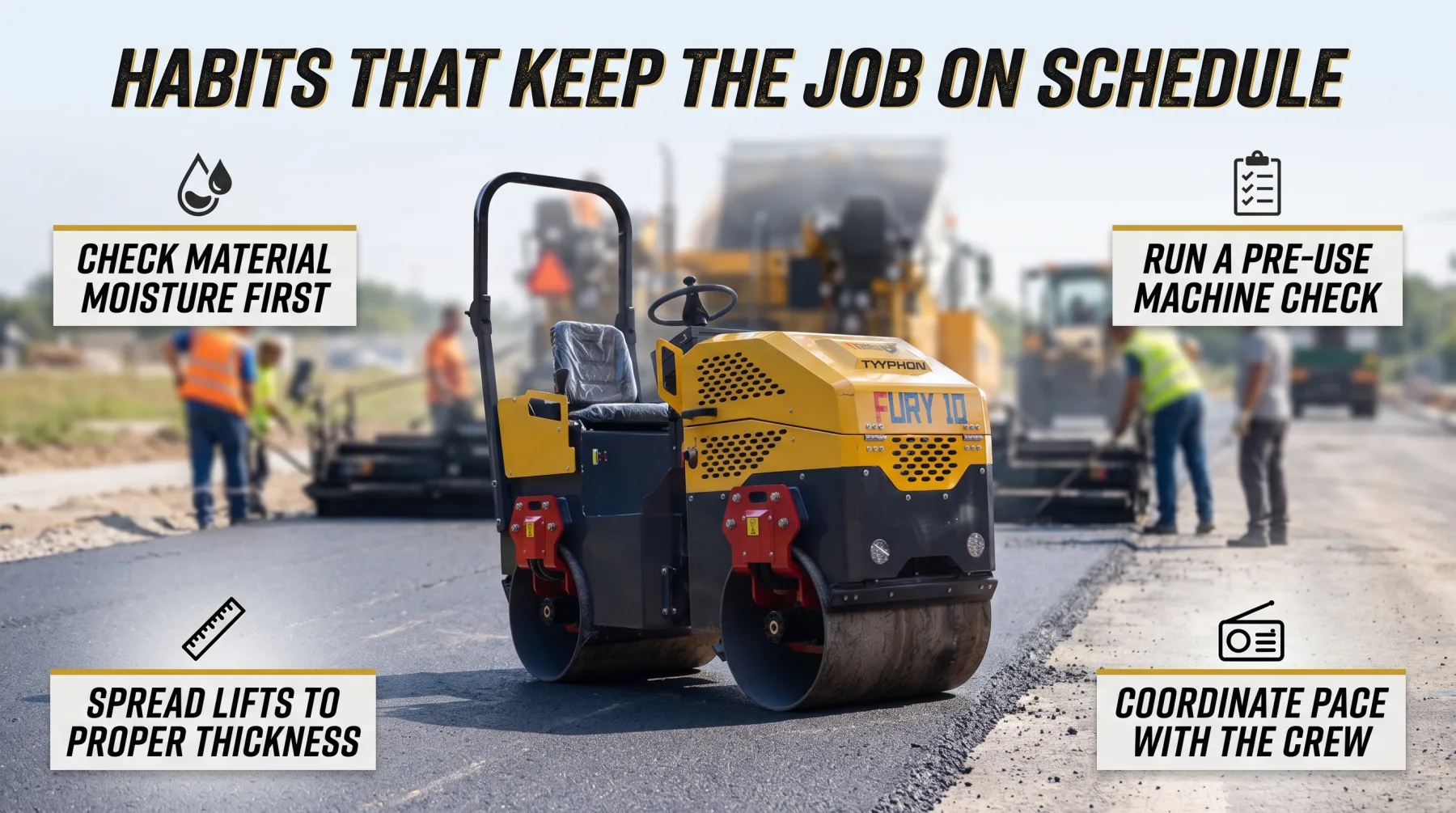
Coordination ties the whole day together on a busy site. Matching your rolling pace to the crew laying material, staging a second roller on large jobs, and communicating clearly with the trades scheduled behind you all prevent the gaps and pileups that throw a timeline off. What this means: prep the site, ready the machine, and coordinate with the crews around you, and the roller works steadily from start to finish instead of stalling on avoidable delays.
Conclusion
Answering how long it takes to compact a site with a road roller comes down to weighing the job honestly rather than guessing at a number. Start by recognizing why the estimate matters, since crews, pours, and deadlines all wait on ground that's ready. Weigh the factors that shape the timeline, including site size, material type, lift thickness, and roller capability, then lean on realistic ranges, from under an hour for a small driveway to multiple days for a large commercial pad, as a planning starting point. Pace the roller with a planned pattern, even overlap, and steady speed, confirm density with a real test before you move on, and build the habits, site prep, machine checks, and crew coordination, that keep the work finishing on schedule. Estimate the job right, and you quote deadlines you can hit while keeping every crew behind the roller moving. When you're ready to put a dependable road roller matched to your site to work, reach out to a trusted equipment specialist who can pair a reliable machine with the results your projects depend on.
Frequently Asked Questions
How long does it take to compact a site with a road roller? It depends on the site's size, the material, the lift thickness, and the roller. As a rough guide, a small residential driveway or patio base often takes under an hour, a residential parking pad runs one to three hours, a mid-size commercial lot fills half a day to a full day, and a large commercial pad can take multiple days, sometimes with more than one roller. Confirm the real timeline against your site's square footage and the number of passes the spec requires.
What makes road roller compaction take longer? Several factors stretch the timeline. A larger site means more surface to cover, cohesive soils like clay resist compaction and need more passes than asphalt or granular base, and thick lifts trap compaction energy near the surface and demand extra rolling. A lighter roller or one without vibration also reaches density in more passes than a heavy vibratory machine. Difficult moisture conditions and a demanding density spec add time as well.
How do I know when compaction is finished so I can move on? The surest way is to measure density with a nuclear gauge or a sand cone test against your project's target. On site, you can also read the material itself: once it stops visibly deflecting under the drum and no longer moves, ruts, or pumps, it has reached refusal and won't gain density from more passes. When the spec calls for a specific density, always confirm it with a proper test before scheduling the next crew.